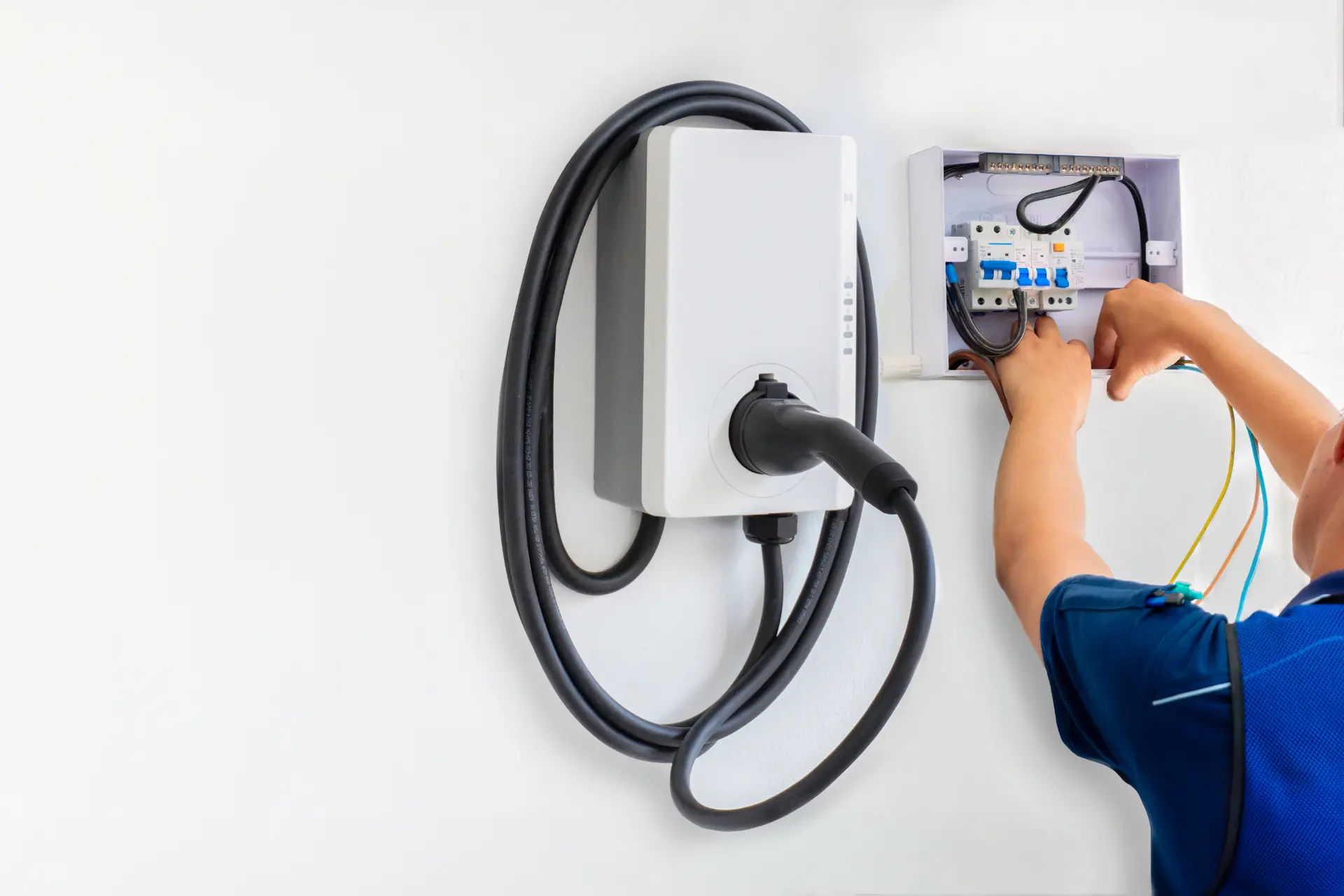
The charger is the easy part. The cost drivers are the distance from the panel to the parking spot, whether the run is exposed conduit or fished through finished walls, available capacity for a 240V dedicated circuit, and whether you want a hardwired unit or a NEMA 14-50 receptacle.
Here is how we scope it, and when load management beats a panel upgrade.
The Circuit, Not the Charger, Drives the Price
A Level 2 charger needs a dedicated 240V circuit. The conductor size, conduit, and labor to get that circuit from the panel to the parking spot is the bulk of the work.
A panel on the garage wall behind the car is a short, clean job. A panel on the far side of the house with a finished ceiling in between is a very different day.
- Distance and route from panel to parking position
- Exposed conduit versus fishing through finished walls
- Attic, crawlspace or trenching for a detached garage
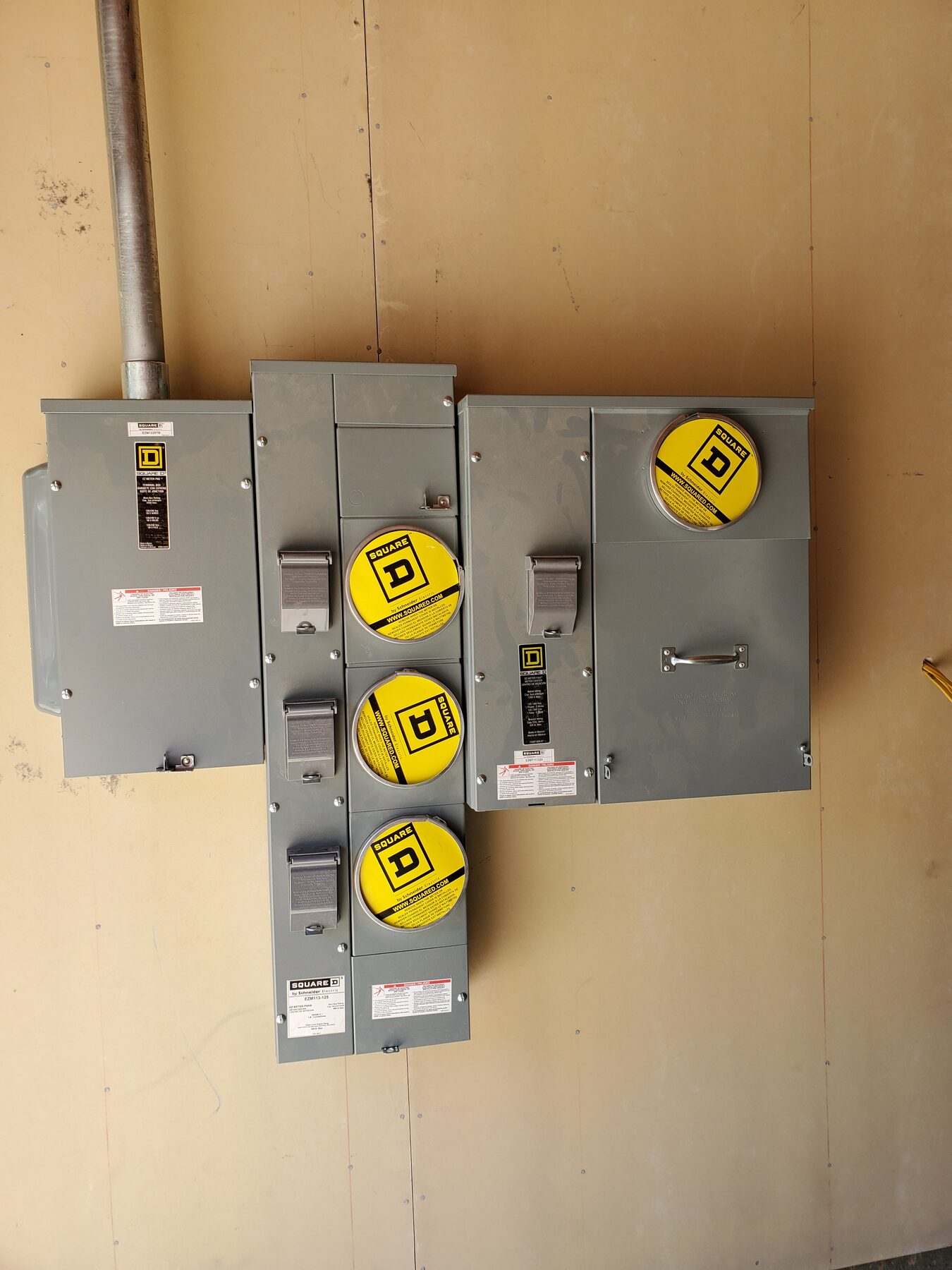
- Panel space and available capacity
Hardwired or Receptacle
A NEMA 14-50 receptacle lets you unplug and take the unit with you, and it suits people who expect to change vehicles or chargers. Hardwiring supports higher continuous current, removes a connection point that can loosen over time, and is required outdoors in some configurations.
For a permanent home charger at 48 amps, hardwired is the stronger choice.
Sizing and the 125 Percent Rule
EV charging is a continuous load, so the circuit is sized at 125 percent of the charger output. A 32-amp charger needs a 40-amp circuit, a 40-amp charger needs a 50-amp circuit, and a 48-amp charger needs a 60-amp circuit.
That rule is also why the charger you buy has to be matched to what the service can actually deliver, rather than the other way around.
When You Do Not Need a Panel Upgrade
Many older homes on 100-amp services can still charge at Level 2 with load management. These devices monitor the whole-home draw and throttle or pause charging when the range, dryer or heat pump is running.
Overnight charging windows are long, so a pause of twenty minutes at dinner time has no practical effect on a full battery by morning.
- Load-management devices are far cheaper than a service upgrade
- Some chargers include this capability natively
- A load calculation confirms whether it is enough
Permits, Inspection and Rebates
Charger circuits are permitted and inspected work. Beyond compliance, that documentation is what utility and state rebate programs ask for, and it is what a future buyer's inspector will want to see.
We pull the permit, install to the manufacturer's listed instructions, and leave you with the paperwork the rebate application needs.
Send us a photo of your panel and where you park, and we can usually narrow the estimate before anyone drives out.