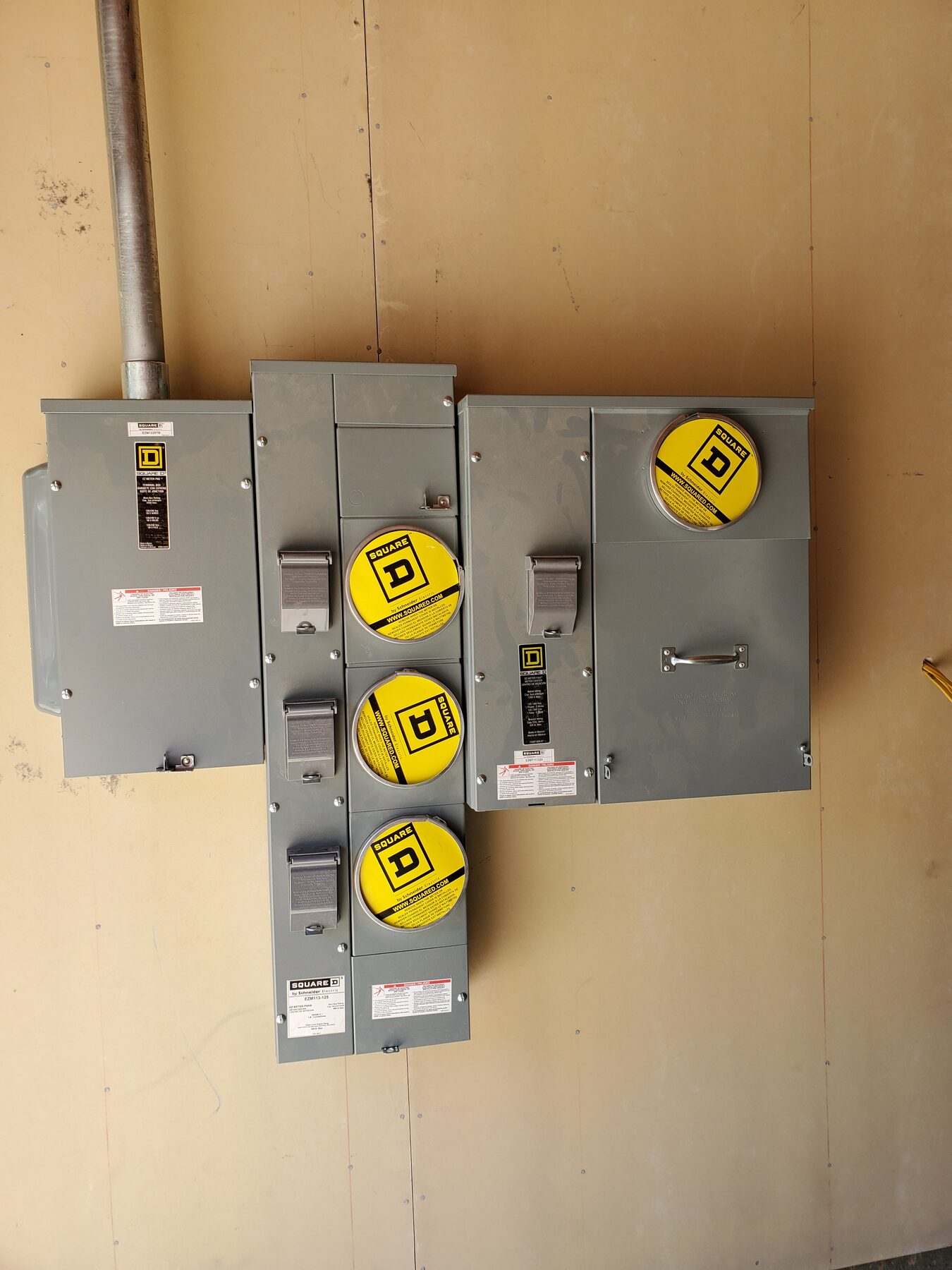
Most Ukiah homes built before the 1980s were wired for a house with one oven, one AC unit and no electric vehicle. The question is not whether 100 amps is old, it is whether your calculated load fits inside it.
We walk through the load calculation an electrician actually runs, the four signs that point to a genuine capacity problem, and the cases where a subpanel or a load-management device solves the issue for a fraction of a service upgrade.
What a Load Calculation Actually Counts
An electrician does not guess capacity by looking at the panel door. The calculation starts with the conditioned square footage of the home, adds fixed appliance loads such as the range, dryer, water heater and well pump, adds the larger of heating or cooling, then applies the demand factors the code allows because no household runs everything at once.
The result is a number in amps that either fits inside your existing service or does not. That number is what matters.
Two homes with identical panels can land far apart once one of them has a heat pump, an induction range and a car charging overnight.
- Square footage general lighting and receptacle load
- Fixed appliances: range, dryer, water heater, dishwasher, disposal
- Larger of heating or air conditioning load
- Well pump, septic pump, shop equipment and pool equipment
- EV charging, which is a continuous load and gets no diversity discount
Four Signs That Point to a Real Capacity Problem
Symptoms tell you more than the label on the meter. When the main breaker trips under normal use, that is capacity.
When a branch breaker trips, that is usually a circuit problem instead. Lights dimming as the well pump or air conditioner starts points to voltage drop, which can come from the service conductors, the utility drop or loose terminations.
Warm panel covers and a burning smell are urgent and should stop the conversation about upgrades until the panel has been inspected.
- The main breaker trips when several large loads run together
- Lights dim noticeably when a motor load starts
- The panel cover is warm to the touch or shows discoloration
- The service is a known problem brand with a documented failure history
When a Subpanel or Load Management Is the Better Buy
If the calculation shows you have capacity but no physical space for breakers, a subpanel solves it for a fraction of a service upgrade. If the only thing pushing you past the limit is an EV charger, a load-management device that pauses charging while the dryer or range runs often keeps a 100-amp service viable.
We price both against a full upgrade so the decision is made on numbers rather than on the age of the equipment.
What the Upgrade Involves If You Do Need It
A service upgrade is a coordinated job. It includes a permit, an inspection, a utility disconnect and reconnect, new service conductors, a new meter main and panel, and a grounding and bonding system brought up to current code with ground rods and a water bond.
Power is usually off for most of a working day. We schedule the utility and the inspector in advance so the sequence does not stall halfway through and leave a house dark overnight.
- Permit pulled and inspection scheduled before demo begins
- Meter main and panel replaced together to avoid duplicate utility trips
- Grounding electrode system and water bond brought to current code
- Circuits labeled accurately at completion, not guessed at
Planning for the Next Five Years
The cheapest time to add capacity is while the panel is already open. If a heat pump, a second EV or a shop subpanel is on your list, tell us during the estimate so the panel is sized and the spare conduit is run once.
That one conversation is usually the difference between a clean upgrade and a second service call two winters later.
If you are unsure where your home sits, the load calculation is the fastest way to find out. It costs far less than an upgrade and it either rules the work out or tells you exactly how to size it.